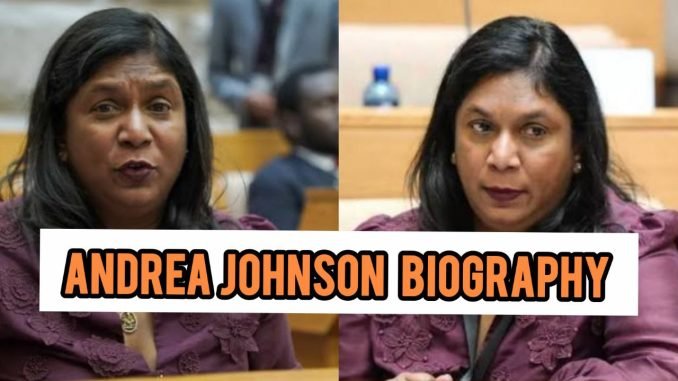
Advocate Andrea Johnson Biography
Andrea Johnson was born on June 14, 1974, in KwaZulu-Natal, South Africa. She is a senior lawyer and the head of the Investigating Directorate (ID/IDAC) within South Africa’s National Prosecuting Authority. Over decades she worked in specialized units that focus on organized crime and high-value corruption cases. Her steady rise and professional reputation made her a natural candidate to lead the country’s specialized anti-corruption arm when the government moved to strengthen investigations into state capture and large-scale fraud. Advocate Andrea Johnson is 51 years old as of 2025.
Johnson is widely regarded in legal circles as a thorough, disciplined prosecutor who understands both court work and complex investigations. That reputation was formed from many years of work inside prosecuting and investigatory bodies, where she handled sensitive evidence and multi-agency cases. Her public profile rose further as she took on major files and later when she led the Investigating Directorate Against Corruption (IDAC), the directorate within the National Prosecuting Authority charged with probing top corruption cases.
Advocate Andrea Johnson Career
Andrea Johnson’s career spans mainstream prosecution work and deeper involvement in elite anti-corruption investigations. She earned her legal qualifications in the 1990s and worked in specialised units such as the Directorate of Special Operations (the Scorpions) and other prosecutorial teams that handled organised crime and serious corruption matters. Over time she prosecuted high-profile matters and gained experience with financial forensics and complex evidentiary issues. That background shaped her methodical approach to investigations and courtroom presentations.
In early 2022 President Cyril Ramaphosa appointed Johnson to lead the Investigating Directorate (ID/IDAC) in the NPA. As head of IDAC she oversees investigations into alleged corruption at senior levels of government, the security cluster, and public procurement. The directorate’s work often overlaps with other bodies—police specialised units, forensic auditors and international partners—because modern corruption files typically cross borders and institutions. Her role requires balancing tough, technical investigations while protecting legal process and suspects’ rights.
As IDAC head, Johnson set up case teams, designated investigators and prosecutors for major matters, and authorised cyber and search warrants where needed. That operational role has put her in the public eye because the directorate investigates politically sensitive files. Her office has worked on cases that involve large tenders and alleged manipulation of procurement rules, and that work drew particular attention in 2024–2025 with the so-called “Big Five” and police tender controversies.
Advocate Andrea Johnson Personal Life
Advocate Andrea Johnson is married to Junaid Johnson. Both have long careers connected to law enforcement and prosecution work: Andrea in prosecution and her husband in Crime Intelligence within SAPS. Because of their overlapping spheres, MPs and commentators have sometimes raised questions about information sharing. Johnson has been clear and emphatic that she and her husband maintain strict boundaries between their work-lives. In her recent parliamentary testimony she used a vivid phrase to describe why: “pillow talk gets people killed,” meaning they do not discuss case details at home and keep professional lines firm. That statement was widely reported during her appearance before an ad hoc parliamentary committee.
Her commitment to professional ethics has been a recurring theme in her public remarks. Johnson stresses that prosecutorial independence and careful evidence handling are core to IDAC’s credibility. She has also noted the emotional and security pressures that come with prosecuting major corruption cases, including the personal cost of threats and public scrutiny. These human elements often shape how she describes the demands of the job when speaking to parliament, media and colleagues.
Advocate Andrea Johnson Appointment and Controversies
Andrea Johnson Appointment to lead the Investigating Directorate
Andrea Johnson’s appointment to head the NPA’s Investigating Directorate was announced in late February 2022 and took effect in early March that year. The move formed part of the state’s effort to strengthen independent investigations into alleged state capture and grand corruption, and it followed the resignation of a previous directorate head. Johnson’s brief was to professionalise major investigations, coordinate forensic work and prepare strong dockets for prosecution where the evidence supported criminal charges. Her appointment signalled a renewed prosecutorial focus on large-scale, institution-level corruption.
Andrea Johnson High-stakes files and the Matlala / SAPS tender inquiry
One of the highest profile files IDAC has handled under Johnson is the probe into an alleged irregular SAPS tender worth hundreds of millions of rand involving businessman Vusimuzi “Cat” Matlala. In November 2025 Johnson testified before a parliamentary ad-hoc committee that IDAC is investigating supply chain management officials and other SAPS members linked to the R360 million contract that Matlala’s company won and which was later cancelled.
She told MPs that the criminal investigation focuses on alleged PFMA contraventions and on whether supply-chain processes were bypassed. Johnson also used parliamentary testimony to emphasise that allegations about politicians are being examined, but she refused to name individual politicians before the directorate had evidence to support criminal charges. That restraint reflects prosecutorial caution: naming suspects publicly without solid evidence can prejudice investigations and unfairly tarnish reputations.
Phone data, cyber warrants and evidentiary gaps
A crucial operational issue Johnson highlighted in parliament was the state of the digital evidence. IDAC sought cyber and search warrants after Matlala’s arrest and the seizure of his phones. Johnson told MPs that during the download of the devices’ contents there were gaps and indications that some data had been deleted. The deletion of data, she said, would form part of the cyber expert’s report and is material to establishing whether evidence was tampered with or lost. That revelation raised alarm because intact digital records are often critical to proving complex procurement and corruption schemes. News reports flagged that much of IDAC’s casework depended on reconstructing what was available and explaining missing material.
Why Johnson resisted naming politicians publicly
During the hearings, EFF leader Julius Malema and other MPs pressed Johnson to name politicians who might be implicated. Johnson repeatedly declined, saying it would be irresponsible to throw names into public debate before IDAC had evidence. Her point was simple: prosecutions require evidence, not allegation. She warned that public naming can derail investigations and lead to wrongful public condemnation. At the same time she acknowledged that “there are several persons implicated regardless of ranking” and that IDAC will pursue evidence against any person implicated if the facts support criminal charges. That careful stance sits at the heart of prosecutorial ethics: investigate fully, preserve the integrity of the evidence chain, and let courts make final determinations.
Andrea Johnson Accusations of ‘witch-hunt’ and IDAC’s public defence
Some critics—especially those whose colleagues face arrest or whose units are in the spotlight—have depicted IDAC’s investigations as politically motivated or as a “witch-hunt.” Johnson strongly rejects that framing. In testimony she defended her directorate’s independence and the legal basis for its operations. She explained that investigations can and do overlap with labour or operational issues (for example where complaints touch on how appointments were made), but that IDAC’s mandate is to follow criminality allegations involving fraud, bribery or PFMA breaches. Johnson told MPs that referrals to IDAC often come from audit and risk units, and that these referrals are processed under internal policies that designate investigators and prosecutors to pursue allegations.
Security, ethics and public scrutiny
Johnson’s role puts her at the intersection of law, politics and security. Her public statements about personal boundaries with her husband—which she expressed with the memorable phrase about “pillow talk”—reflected both ethical caution and awareness of real security risks. She has also raised concerns about threats and the fragility of digital evidence. All this underlines how leading corruption investigations today requires not only legal skill but also security planning, robust cyber processes and careful public communication to protect cases while explaining them to a worried public.
Conclusion
Advocate Andrea Johnson is a senior prosecutor whose leadership of the Investigating Directorate has put her at the centre of some of South Africa’s most sensitive corruption probes. Johnson’s insistence on evidence-based prosecutions — and on not naming suspects before investigations conclude — reflects basic prosecutorial ethics. The Matlala tender inquiry and the larger questions about policing and procurement have highlighted why careful, transparent process matters.
FAQs
What major case did she discuss in Parliament in November 2025?
She discussed the R360 million SAPS tender linked to businessman Vusimuzi “Cat” Matlala and explained that IDAC is investigating supply-chain and SAPS officials for alleged PFMA contraventions. She also told MPs that some digital data from seized phones appeared to have been deleted.
Why did she refuse to name politicians accused of wrongdoing?
Johnson said it would be irresponsible to name politicians without evidence. She emphasised that IDAC will follow evidence and prosecute if the facts justify charges, but that public naming without proof can derail investigations and unfairly harm reputations.
Does Andrea Johnson share case details with her husband?
Johnson told parliament she does not share case information with her husband, who works in Crime Intelligence. She used the phrase “pillow talk gets people killed” to explain why they keep strict boundaries between their professional work and private life.
What happens next in the Matlala tender probe?
IDAC will continue its investigation, complete cyber and forensic reports, and where evidence supports it will refer matters to prosecutors for criminal charges. Some dossiers have already been sent to or considered by the DPP, and parliamentary and commission hearings may generate further referrals and public reports.

James George is a journalist and writer who focuses on construction and mining, with 11 years of experience reporting on projects, safety, regulations, and industry trends. He holds a BSc and an MSc in Civil Engineering, giving him the technical background to explain complex issues clearly.
Leave a Reply